2010年4月29日星期四

雲裳集 ── 機師的名字叫摩西?

這事件發生於去年 12 月 20 日下午 3 時 40 分:一個飛機形的黑影在雲層上飛過,從右邊飛往左邊。幾秒鐘之後,雲層開始沿黑影飛過的地方裂開,從右邊至左邊,過程像一塊布被剪刀破開似的。裂縫只出現了三分鐘,三分鐘過後,裂縫已被新生成的雲填補了。


難道那架飛機的機師,他的名字叫摩西?

2010年4月10日星期六

向桜井先生致敬

以前在噹噹 U 讀過一科 Quantum Mechanics and Related Topics , 所用的課本是 Modern Quantum Mechanics ── 極其平凡的一個書名,好比陳大文的名字,假如世上有千千萬萬個陳大文,亦不難相信世上有一百幾十本以 Modern Quantum Mechanics 為書名的量子力學課本。難怪世人提及課本時都以作者的名字為 proxy ,當然,一個作者出書十本八本亦是有的;都是 Richard Feynman 總明,直將其著作的一套課本題為 The Feynman Lectures on Physics 。

那本 Modern Quantum Mechanics 的作者叫 J.J. Sakurai 。一個未見過世面且有點兒自閉的學生,在一個未有光纖入屋的年代,難怪對這個陌生的名字不以為然,當時只知日本人當中有個出名的物理學家叫湯川秀樹﹝Hideki Yukawa﹞,至於 J.J. Sakurai,只知是日本人的名字,亦猜想名字當中有個「櫻」字,只因小時候用過櫻花牌廣告彩,知道 Sakura 是櫻花。

為什麼在十七年後的今日突然興起談及 J.J. Sakurai 的 Modern Quantum Mechanics 呢?

當年我根本沒有買這本書,重甸甸的一本 Hardcover ,兩百多元實在不捨得買,不要忘記那是十七年前,十元八塊在大學 Canteen 可飽吃一頓碟頭飯的年代。現時書架上的一本是從專賣國產書的上樓書店買回來的國內版,買了不過一年多。也許你會問:畢業後那麼多年還買來做什麼?因為這本書很特別 ── 除了內容特別艱深之外,其編排與眾量子力學課本不同,視點獨特而新鮮;亦因為它如此「特別」,當年極盡所能對其內容亦只是一知半解。為了一解這個一知半解,一於買來擺,雖則粵語長片中的老套對白亦有云:「得到個人,也得不到個心」。

直至幾天前,好偶然地在 Google 的搜尋結果中見到 J.J. Sakurai 這名字,受好奇心的驅使,再加搜尋,細心查看…… 。原來 J.J. Sakurai ﹝Jun John Sakurai﹞是頗有名氣的理論物理學家,日本名字叫 桜井純,曾於加州大學洛杉磯分校任教。1982 年 10 月,桜井教授到 CERN ﹝見註﹞交流訪問,期間突然暴斃,終年49 歲,當時 Modern Quantum Mechanics 尚未完稿,遺稿是桜井太太及桜井教授的同事替他收拾遺物時發現的,其生前好友將遺稿整理續編後出版。

得知這本書的背境之後,頓然有一份不知怎的感受湧上心頭!

註: CERN「歐洲核子研究組織」,設於日內瓦,早前駭人聽聞的「上帝粒子」實驗就是 CERN 的傑作。

2010年3月27日星期六

上山落山

我今天又登上了伊利近山,在山上逗留了一個上午。


伊利近山是一座相當特別的山,因為它比周圍的大廈還要矮。


在我有生之年,不知還要登上伊利近山多少次。

2010年3月21日星期日

陽光下的新事

我常常跑這條路線:從勵德邨道與大坑道交界起步,沿大坑道往山上跑,在大坑道盡處轉上黃泥涌峽道,跑至最高點,然後折返。印象中,第一次跑這條路時正唸中三。廿多年來,沿路除了多了幾幢高廈、斜坡大規模修葺過以外,還有什麼大變化呢?怎麼也想不起…… 。

拿著部手機邊跑邊拍還是第一次,因為最近換了手機,之前用的都沒有拍攝功能。


很美麗的山脊線,山的另一面是香港仔:


以下照片拍得太陽下還有一個壓扁了的影像,也許是陽光穿透雲層時被折射,真不知這個現象有沒有特別的名稱,是否稱得上是海市蜃樓亦未可知:


以下照片看似平平無奇,但假如你夠細心,便會察覺太陽左邊山脊對上有一枚「幻日」﹝sun dog﹞。為了證實是幻日,我細察照片,將太陽及「疑似幻日」與周邊建築物作比對,並在地圖上定出拍照地點,再利用地圖上建築物的位置,分別定出太陽及「疑似幻日」當時的方向,量得兩條方向線的夾角為 22 度。沒有錯,當陽光穿過高雲時,光線受水平面向的六角形冰晶折射後的最少偏向角正是 22 度 ── 幻日距太陽的視角。當時看到的幻日確有如彩虹般的色譜,可惜拍下來卻不甚顯眼。


巨形的日晷:

2010年3月11日星期四

Fooled by Rates and Ratios

In the book Fooled by Randomness, Nassim Nicholas Taleb wrote:
I found in the behavioral literature at least forty damning examples of such acute biases, systematic departures from rational behavior widespread across professions and fields. Below is the account of a well-known test, and an embarrassing one for the medical profession. The following famous quiz was given to medical doctors (which I borrowed from the excellent Deborah Bennett's Randomness).

A test of a disease presents a rate of 5% false positives. The disease strikes 1/1,000 of the population. People are tested at random, regardless of whether they are suspected of having the disease. A patient's test is positive. What is the probability of the patient being stricken with the disease?

Most doctors answered 95%, simply taking into account the fact that the test has a 95% accuracy rate. The answer is the conditional probability that the patient is sick and the test shows it ─ close to 2%. Less than one in five professionals got it right.

I will simplify the answer (using the frequency approach). Assume no false negatives. Consider that out of 1,000 patients who are administered the test, one will be expected to be afflicted with the disease. Out of a population of the remaining 999 healthy patients, the test will identify about 50 with the disease (it is 95% accurate). The correct answer should be that the probability of being afflicted with the disease for someone selected at random who presented a positive test is the following ratio:

Number of afflicted persons / Number of true and false positives here 1 in 51.

Think of the number of times you will be given a medication that carries damaging side effects for a given disease you were told you had, when you may only have a 2% probability of being afflicted with it!

I recall that when I first came across with the subject of verification, I often mixed up rates and ratios. I later learned that false alarm ratio and false alarm rate are not the same, and hit rate and hit ratio are different. As in the above example, "rate of 5% false positive" means the false alarm rate is 5% (which is also equivalent to saying that the hit rate is 95%) whereas what the question asking is about the hit ratio (which complements the false alarm ratio).

What is more striking is that false alarm rate and false alarm ratio, both llustrates how frequent false alarm is encountered, can differ very much in number when the subject event is rare. In the given example, subject to the rate of occurrence of 1/1,000, a false alarm rate of 5% is in contrast with a false alarm ratio of over 98%!

The lesson to learn is that: when you are being told of the performance of a system by someone who throws out charts and numbers, beware of being tricked by small false alarm rate. It can be leveraged by the large number in the null-null quadrant of the contingency table to result in a large false alarm ratio.

The 2002 Nobel Prize in Economics was notable because one of the laureates Daniel Kahneman is not an economist but a psychologist. Kahneman, in collaboration with Amos Tversky, developed the Prospect Theory which is a psychologically realistic alternative to the classical Expected Utility Theory.

In their study, Kahneman and Tversky clarified the kinds of misperceptions of randomness that fuel many of the common fallacies and biases. What illustrated in the original posting of this subject is a fallacy that is commonly known as the base rate fallacy. In the legal regime, such a fallacy together with other fallacies, are collectively referred to as the prosecutor's fallacy.

2010年2月27日星期六

踏足新中環

一月中才來過,當時道路還未開通﹝見於此﹞。這項工程進展真快,不消兩個月,龍和道已通車。在龍和道兩側,工程仍在進行。

從郵政總局經龍和道向東慢步,十多分鐘已走畢全程,抵達解放軍軍營,全程居然沒有遇上一個行人。

以下是繪在路傍地盤圍板上的宣傳標語:

‧「供市民享用的海濱長廊」"A waterfront promenade for public enjoyment"
‧「富吸引力及交通暢達的海港」"An attractive and accessible harbour"
‧「活力之港」"A harbour of life"

請恕我理解能力差,我真的不明白究竟想表達什麼!


※          ※          ※

香港政府的新聞公告,龍和道於 2月23日正式通車。

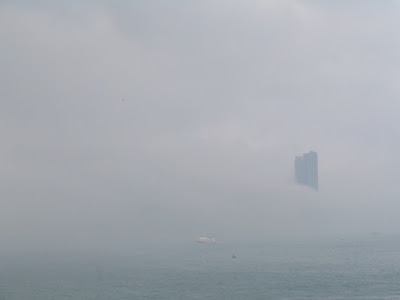
霧鎖汲水門

時近中午,正乘新巴 18P 到西環,在巴士上層透過玻璃窗望向對面海,赫然看見海上一片朦朧。在屆地街附近下車,專程步出海邊欲看過究竟,海邊是個墩船碼頭。這是我第一次在西環海邊看海霧。


2010年2月12日星期五

又放榜了‧又不合格

再接再厲,還是不合格。2009 年第二回日本語 2 級能力考試己放榜,總分 232/400,以百分比計就是 58%,離合格只差 2%,三部份細分為:
  • 文字‧語彙:69/100
  • 聽解:36/100
  • 讀解‧文法:127/200
雖然較去年有進步,但始終還是差些少,考試結束後步出試場已意悉不慎答錯了數條題目,但仍相信會合格的,結果未免有點強差人意。

「假如小心一點便可過關啊!」

「假如?假如再大意一點的話分數會更低呢!」

事實是:我的日語水平在 2 級能力考試的合格邊緣,無論是「差一點兒合格」,還是「差一點兒不合格」,均表示水準不足,仍雖努力啊!

2010年2月10日星期三

天色

2010 年 2 月 7 日 ── 昂坪 360 ── 雨:


2010 年 2 月 8 日 ── 灣仔 ── 曇:


2010 年 2 月 9 日 ── 灣仔 ── 霧:


2010 年 2 月 10 日 ── 灣仔 ── 晴:


※          ※          ※


我這幾天的心情,正如這幾天的天氣。

2010年1月17日星期日

新中環‧ 2010 年初

上一篇〈新中環〉發佈至今已一年多,當時仍是一片黃砂的新中環,今時今日已有一截半建成的路:


﹝攝於 2010 年 1 月 17 日﹞

2010年1月4日星期一

埋首於書堆中的駝鳥 ── 2010 篇

  • 《蘭開夏道》王迪詩
  • 《蘭開夏道 II 》王迪詩
  • 《三分鐘宇宙 ─ 現代科學新論》李逆熵
  • 《当我谈跑步时,我谈些什么》村上春树﹝施小炜 译﹞
  • 《郎咸平说:谁在拯救中国经济 ── 复苏的背後和萧条的亮点》郎咸平
  • 《我們為何在此?》霍金 等
  • 《1Q84 〈4月-6月〉》村上春树﹝施小炜 译﹞
  • 《1Q84 〈7月-9月〉》村上春树﹝施小炜 译﹞
  • 《电视人》村上春树﹝林少华 译﹞
  • 《破解上市公司易容術》黃玲
  • 《語理分析的思考方法》李天命
  • 《地產霸權 (Land and the Ruling Class in Hong Kong)》 潘慧嫻
  • 《國力:練乙錚文集 III) 》練乙錚
  • 《麥嘜三隻小豬》謝立文、麥家碧
  • 《Nikon 鏡頭專業評測指南》
  • 《數位單眼相機的知識 200 攝影技巧篇》
  • M.C. ESCHER - The Graphic Work
  • The Black Swan: The Impact of the Highly Improbable, Nassim Nicholas Taleb
  • Fooled by Randomness: The Hidden Role of Chance in Life and in the Markets, Nassim Nicholas Taleb
  • Chaos and Order in the Capital Markets: A New View of Cycles, Prices, and Market Volatility, 2nd Ed., Edgar E. Peters
  • The (Mis)behavior of Markets: A Fractal View of Financial Turbulence, Benoit Mandelbrot & Richard L. Hudson
  • The Drunkard's Walk: How Randomness Rules Our Lives, Leonard Mlodinow
  • The First Three Minutes: A Modern View Of The Origin Of The Universe, Steven Weinberg
  • Turbulent Mirror: An Illustrated Guide to Chaos Theory and the Science of Wholeness, F. David Peat and John Briggs
  • The Perfect Swarm: The Science of Complexity in Everday Life, Len Fisher
  • Simply Complexity: A Clear Guide to Complexity Theory, Neil Johnson
  • The Corporation: The Pathological Pursuit of Profit and Power, Joel Bakan
  • Extraordinary Clouds, Richard Hamblyn
  • Fermat's Last Theorem, Simon Singh
  • The Emperor's New Mind, Roger Penrose
  • The Mystery of the Quantum World, Euan Squires
  • Deep Simplicity: Chaos, Complexity and the Emergence of Life, John Gribbin
  • Fractal Market Analysis: Applying Chaos Theory to Investment & Economics, Edgar E. Peters
  • Po: Beyond Yes and No, Edward de Bono

The Effective Use of Benford's Law to Assist in Detecting Fraud in Accounting Data, Cindy Durtschi, William Hillison and Carl Pacini, Journal of Forensic Accounting Vol.V(2004), pp.17-34
The Fourth Quadrant: A Map of the Limits of statistics, Nassim Nicholas Taleb
A Focus on the Exceptions that Prove the Rule, Benoit Mandelbrot and Nassim Taleb
Common Errors in Interpreting the Ideas of The Black Swan and Associated Papers, Nassim Nicholas Taleb
How Fractals Can Explain What's Wrong with Wall Street, Benoit Mandelbrot, Feb 1999, Scientific American
Random Walks in Stock Market Prices, Eugene F.Fama, Financial Analysis Journal, Sep-Oct 1965

2009年11月18日星期三

気象予報士

勿將日文漢字當成簡體中文,簡體中文是這樣的:「气象预报士」。

日前與朋友談起日本的氣象專業資格──「気象予報士」。在日本從事氣象服務受法律監管,業務預報須由「気象予報士」擔任。聞說已有報導天氣的 announcer 取得此資格。目前獲此資格者共 7,541 名。

要成為「気象予報士」,須於「気象予報士試験」﹝「試験」:考試﹞考獲合格成績。兩張 MC 卷之外還要考 written practical (WP),考試範圍包括:

  • 大氣構造
  • 大氣熱力學
  • 降水過程
  • 大氣輻射
  • 大氣力學
  • 天氣現象
  • 氣候變化
  • 氣象業務法及其他有關法規
  • 觀測資料之運用
  • 數值預報
  • 短、中、長期預報
  • 區域預報
  • 臨近預報
  • 天氣災害
  • 預報準確度評估
  • 預報之應用
  • 氣象概況及其變動之掌握﹝WP﹞
  • 局部地區天氣予報﹝WP﹞
  • 在熱帶氣旋等緊急情況下之應對﹝WP﹞

    縱然報考不限年齡學歷,要合格亦不容易,合格率一般不足 5% 。

    據報最年輕的合格者應考時只得 13 歲,是一名中二學生。
  • 2009年10月23日星期五

    The Ethnic Theory of Plane Crashes and Its Implications

    In Outliers, Malcolm Gladwell wrote an entire chapter on The Ethnic Theory of Plane Crashes. It discloses that a number of plane crashes are attributable to "high power distance" (Hofstede's Cultural Dimension) that undermined communication among flight crew members and between flight crews and ATC. Illustrations are lively made through "playing back" conversations in the cockpits that had been recorded by the black boxes of Avianca 52 and KAL 801 shortly before the planes crashed. When communicating to parties of higher authority, the flight crews did not speak out but mitigated and hinted even in cases of emergency, for instance, the First Officer of Avianca 52 to the ATC, and the First Officer and the Flight Engineer to the Captain in KAL 801.

    It cited "clear correlations between a nation's plane crashes and its score on Hofstede's dimensions" which was said to be showed by safety data published by Boeing.

    The power distance index (PDI) of Hong Kong is 68, ranking 44 among the 68 countries and regions in ascending order on the list. It even ranks higher than Columbia (recall the flight crews on Avianca 52 were Columbians) and South Korea (recall the flight crews on KAL 801 were South Koreans). Hofstede commented "Hong Kong's Power Distance score is 68 compared to the other Far East Asian countries average of 60. This is indicative of inequality of power and wealth within the society. This condition is not necessarily subverted upon the population, but rather accepted by the society as their cultural heritage."

    One can imagine how weak bottom-up communication can be if high power distance is coupled with bureaucratic Role Culture in the public sector.

    Bureaucracy is structural and extrinsic, and can just be deliberate. Power distance, however, is cultural, intrinsic and deeply rooted. It is a social norm attributed to national culture and customs. It shaped a "standard" for the style, tone, manner, protocol and wordings that people adopted in communication. Non-compliance with such "standard" is often regarded as rude, disrespecting, misbehaving or even disobeying.

    There can be similar mishaps in any workplace, particularly in the public sector, although outcomes may not be fatal.

    2009年8月30日星期日

    《1Q84》引發的一串聯想

    《1Q84》的二手貨已於香港的日文書店上架, 1、2 兩冊 Tomato 每冊售一百八十多元,寫樂堂只售一百元。我在寫樂堂買了。數星期前見旭屋有新書,但價錢實在太貴。本來打算等出文庫本,想不到居然那麼快便買到二手單行本。這本過千頁的長長長長篇,自問以目前的日語水平是無法讀得懂的;但,不買不爽啊!

    這套村上春樹的新作,五月底才在日本出版,聽聞未及兩周已勁賣過百萬冊,眾粉絲的飢渴程度可見一斑,畢竟村上春樹上一套長篇《海辺のカフカ》出版至今,已是五年前的事了。

    翻開一看,原來又是「雙線並軌」結構,一篇講「青豆」,一篇講「天吾」。

    《世界の終りとハードボイルド・ワンダーランド》亦是「雙線並軌」結構 ── 到目前為止我最喜歡的村上春樹作品。

    假如將村上春樹的長篇,由我最喜歡的排起,次序是:
    《世界尽头与冷酷仙境》
    《海边的卡夫卡》
    《一九七三年的弹子球》
    《且听风吟》
    《奇鸟行状录》
    《寻羊冒险记》
    《舞!舞!舞!》
    《挪威的森林》
    《国境以南 太阳以西》/《天黑以后》/《斯普特尼克恋人》

    最後三本不分先後,事關印象模糊。為何書名都是簡體字?因為我看的都是由林少華翻譯出來的簡體版。

    說起「雙線並軌」,自然想起劉以鬯的《對倒》。這位香港本地作家,早於 1972 年經已採用「雙線並軌」結構寫成《對倒》。村上春樹於 1979 年藉《風の歌を聴け》﹝國內的林少華將書名譯為《且听风吟》;台灣的賴明珠將書名譯為《聽風的歌》﹞出道, 1985 年才寫成《世界の終りとハードボイルド・ワンダーランド》。

    王家衛的電影《花樣年華》,聽聞創作靈感亦源自《對倒》。《花樣年華》上映至今經已九年,到目前為止仍是我最喜愛的電影。那首主題音樂 ── 梅林茂的 Yumeji's Theme ── 亦是我甚喜愛的。

    2009年8月21日星期五

    花容


    我很喜歡這幀照片,三年前的一個夏日,在香港大學的荷花池拍得,從此成了我電腦的桌面圖像。拍得好嗎?不知道啊!對於攝影,我是門外漢,更何況這幀照片是用 DC 拍的,沒什麼技術可言。但每當看著這幀照片,就覺得出塵脫俗,遠離人煙。

    ※          ※          ※

    究竟這是荷花還是蓮花?荷花與蓮花又有什麼分別?

    有人說:「荷花就是蓮花」。
    另有人說:「荷花俗稱蓮花」。
    更有人說:「荷花是葉子升出水面的蓮花」。
    甚至有人說:「荷花會長蓮藕,蓮花沒有蓮藕」。

    眾說紛紜。始終真相不明。